
Plants And Warehouses · Independence, KY
Independence Industrial Roofing Contractor
Roof Work for Plants, Warehouses, and Heavy Equipment Buildings
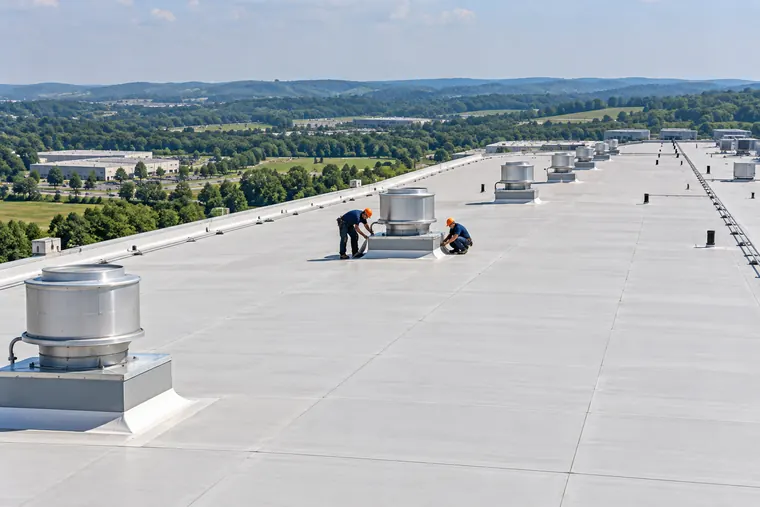
As an Independence industrial roofing contractor, we replace and repair long-span plant roofs carrying exhaust stacks, make-up air units, and expansion joints.
- Inspect Your Roof
- Core Cuts And Readings
- Written Scope
- Free Estimate
Plant Roofs an Independence Industrial Roofing Contractor Handles
An Independence industrial roofing contractor starts with what lands on the roof. Read across to see which approach usually fits each exposure.
- Usually Fits
- Sometimes
- Rarely
| Exposure On The Roof | Standard Single-Ply | Chemical-Rated Sheet | Metal Shields And Pads |
|---|---|---|---|
| Kitchen or fryer grease near a fan | Rarely | Usually Fits | Sometimes |
| Machine oil mist around stacks | Rarely | Usually Fits | Usually Fits |
| Hot process exhaust at a curb | Sometimes | Sometimes | Usually Fits |
| Dust and fines settling across the field | Usually Fits | Sometimes | Sometimes |
| Heavy foot traffic to rooftop units | Sometimes | Sometimes | Usually Fits |
A residue sample from the exhaust area is checked against the membrane maker's chemical resistance chart before the sheet is chosen.
Industrial Roofing Wear Points in Independence
Plant roofs wear around equipment and exhaust first. These are the spots to check.
- Watch
- Repair First
- Call Now
Softened Sheet Near Exhaust
Repair FirstOil or grease film swells some membranes around fans, leaving a gummy patch that tears under boots.
Units Sitting on Insulation
Repair FirstEquipment set straight on the roof crushes boards and splits the membrane beneath its feet.
Torn Expansion Joint Covers
WatchBellows that crack along long buildings let water into the structural joint below.
Drains Packed With Fines
WatchDust from production settles into strainers and backs water up across the field.
Heat Damage at Stacks
Call NowScorched or shrunk membrane around a hot stack needs metal flashing and a heat shield before it opens up.
Commercial Industrial Roofing Options for Independence
Industrial systems pair a membrane with supports, shields, and dividers sized to the equipment on top.
Chemical-Rated Membrane
PVC or a grease-rated sheet around fans, with a sacrificial walkway pad where oil mist settles.
Structural Curbs and Rails
Factory curbs, equipment rails, and pipe supports on pads carry rooftop equipment and piping into the framing.
Expansion Joints and Dividers
Flexible bellows bridge structural joints, and area dividers break huge fields into smaller sections that move independently.
Tapered Slope and Crickets
Where the structure is dead flat, tapered insulation and crickets between drains steer water across long runs.
Benefits of an Industrial Roof System
A roof built around the equipment and exhaust protects the production below and the people servicing the roof.
- Manufacturing Plants
- Distribution Warehouses
- Food Processing
- Machine Shops
Owner
- Sheets matched to the residue on the roof hold up around fans instead of softening into patches.
- Equipment set on rails tied into the framing stops crushing insulation and splitting membrane.
- An engineer's check of the framing comes before new equipment goes up, so loads are known.
Facility Manager
- Walkway pads lead from the hatch to every unit, so tool drops land on pads instead of sheet.
- Grease containment boxes under exhaust fans keep residue off the field of the roof.
- Strainers and extra drains keep fines from backing water across long runs.
Tenants And Staff
- Sections are dried in with a watertight tie-in each day, so production lines below stay covered.
- Dust and debris control over clean areas keeps tear-off grit away from product.
- Crane picks timed around truck docks and shift changes keep traffic moving below.
Production Line Under a Leak?
A drip over equipment gets a temporary patch and a repair at the source. A plant roof near the end of its service gets a phasing plan built around shifts.
Best Industrial Roofing Layout for Independence Plants, Step by Step
Replacing a plant roof while production runs follows a fixed sequence agreed with the plant's safety lead.
Inspect Your Roof
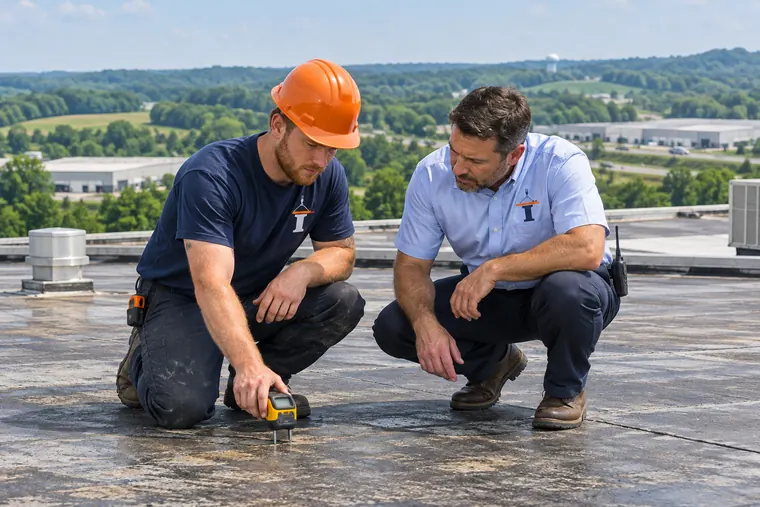
Exhaust areas, curbs, rails, expansion joints, and drains are walked and photographed. A residue sample and core cuts show what the new system must handle.
Plan Shutdown Windows
Fan and make-up air shutdowns near roof adhesive work, hot-work permits, crane picks, and fall protection are set with the plant before tear-off starts.
Replace One Section
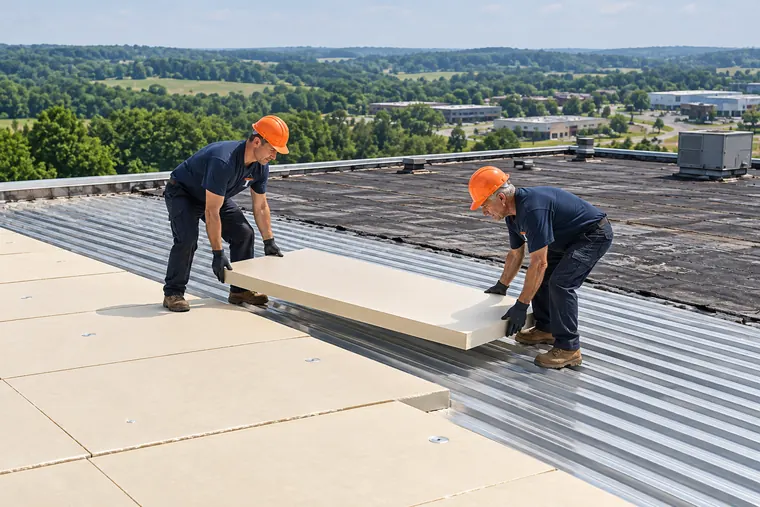
Each section comes off, gets new insulation and membrane, and closes with a watertight tie-in before the crew leaves for the day.
Support and Flash Equipment
Curbs and rails are flashed high enough to stay above water and new insulation, and walkway pads go down along technician paths.
Other Services Plant Roofs Draw On
Industrial roofs mix systems. These pages cover the pieces that show up on plant jobs.
- See the service
Commercial Metal Roofing
Many plants pair a low-slope production roof with a metal warehouse wing, which our metal page covers.
- See the service
TPO Roofing
Office and shipping areas without process exhaust usually take standard white TPO.
- See the service
Commercial Roof Repair
Single curb or stack leaks between replacement phases are handled as repairs.
Industrial Roofing Questions From Plant Managers
Answers on equipment, exhaust, expansion joints, and working over a running plant.
The Roof
What sets industrial roofing apart from other commercial roofs?
Industrial roofs cover long spans and carry heavy units, exhaust fans, and process vents that office roofs rarely see. Daily foot traffic, heat, and chemical exposure work on the membrane. Those features drive the sheet choice, insulation strength, and flashing details more than roof size alone.
How are expansion joints and long roof runs handled?
Long buildings grow and shrink with temperature, so expansion joint covers with flexible bellows bridge structural joints and area dividers break the field into sections. Crickets between drains and tapered insulation add slope, and extra drains or scuppers shorten the distance water travels.
Exhaust And Equipment
Which roof membrane holds up to grease and oil exhaust?
The choice follows the membrane maker's chemical resistance chart and a residue sample from the roof. Kitchen grease usually calls for PVC or a grease-rated sheet near the fan, oil mist for a chemical-rated sheet plus walkway pads, and hot exhaust for metal flashing and heat shields.
How is heavy rooftop equipment supported?
Rooftop equipment curbs and rails tie into the framing, and the membrane is flashed up each support. Pipe supports sit on pads that spread the load, and the heaviest units get structural dunnage. An engineer checks the framing before new equipment goes up.
Working Around Production
Can a plant roof be replaced while production runs?
Yes. Replacing a plant roof while production runs means working section by section, with each day's tear-off closed in by a watertight tie-in. Shutdown windows for fans, crane picks around docks, dust control over clean areas, and hot-work permits are planned with the plant's safety lead.
Who handles fall protection and access on a plant roof?
The roofing crew follows its own fall protection plan and coordinates it with the plant's safety lead, including roof hatch use, guardrails or warning lines at edges, and lift placement. Access routes are agreed before work starts so they stay clear of production traffic.
Bring In an Independence Industrial Roofing Contractor
Share the equipment list and production schedule. We will walk the roof and plan the work around your shifts.