
White Single-Ply · Independence, KY
Independence TPO Roofing Contractor
Find Out Whether Your Low-Slope Building Is Ready for a White Membrane
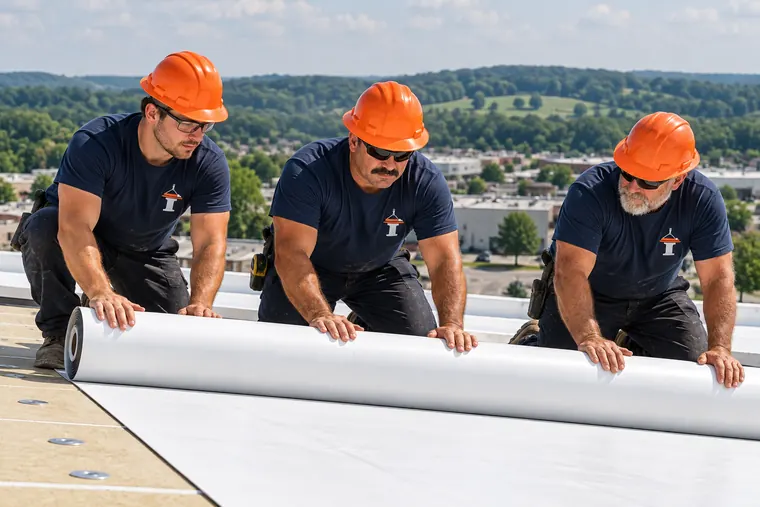
As an Independence TPO roofing contractor, we install heat-welded white membrane on retail, office, medical, and flex buildings with low-slope decks.
- Inspect Your Roof
- Core Cuts And Readings
- Written Scope
- Free Estimate
What an Independence TPO Roofing Contractor Checks First
Before quoting TPO roof installation in Independence, KY, an Independence TPO roofing contractor reads the deck, the slope, and what sits on the roof. These conditions steer the attachment method.
- Usually Fits
- Sometimes
- Rarely
| Roof Condition | Mechanically Attached | Fully Adhered | Induction Welded |
|---|---|---|---|
| Steel deck on a warehouse or big-box building | Usually Fits | Sometimes | Usually Fits |
| Roof that needs a smooth, flutter-free surface | Rarely | Usually Fits | Usually Fits |
| Concrete or gypsum deck | Sometimes | Usually Fits | Sometimes |
| High corner and perimeter wind exposure | Sometimes | Usually Fits | Usually Fits |
| Cold-weather install with adhesive limits | Usually Fits | Sometimes | Usually Fits |
The membrane maker's tested assembly sets the fastener pattern for the field, perimeter, and corner zones of each roof.
TPO Roofing Warning Signs on Independence Buildings
TPO wears in recognizable places. These are the spots to look at from a roof hatch.
- Watch
- Repair First
- Call Now
Cold Spots in Welds
Repair FirstA probe that slides into a lap marks a weld that never fused, often at the start of a run.
Soot Around Kitchen Fans
WatchGrease and exhaust film dull the white sheet and soften some membranes downwind of the fan.
Billowing Sheet After Wind
Call NowFluttering membrane between fastener rows means plates are pulling, usually at corners first.
Torn Curb Corners
Repair FirstOutside corners on unit curbs crack where the membrane folds, so water reaches the curb wood.
Standing Water Between Drains
WatchWater sitting two days after rain shows a low area that tapered insulation can correct.
Commercial TPO Roofing Options for Independence
Mechanically attached vs fully adhered TPO is the first choice. Thickness, cover board, and flashing details round out the system.
Screws and Plates in the Laps
Mechanically attached TPO puts screws and plates under each lap on steel decks, with tighter spacing at corners and perimeters.
Adhesive Over a Cover Board
Fully adhered membrane bonds across a cover board, which leaves a smooth roof surface that stays put in gusts.
Induction-Welded Plates
Plates fastened under the sheet are bonded from above with a magnetic tool, so the roof looks adhered with fasteners hidden.
Clad Edges and Wall Caps
TPO-clad metal at roof edges lets the field sheet weld straight to the perimeter, and parapets get membrane up the face under new coping.
Benefits of a TPO Roof
A welded white sheet changes the roof for the owner, the people who maintain it, and everyone working below.
- Retail Centers
- Offices
- Medical Buildings
- Flex Warehouses
Owner
- Heat-welded seams become part of the sheet, so the laps that fail first on older roofs are one piece.
- Rated reflectance numbers in the Cool Roof Rating Council directory let you compare membranes from different makers.
- Pre-molded boots at pipes and corners match the sheet, which keeps later repairs simple.
Facility Manager
- Repairs are a cleaned surface and a welded patch of matching TPO, so service calls stay short.
- Periodic rinsing near rooftop units brings back some of the brightness that exhaust soot takes away.
- Walkway pads welded to the field mark the path to every unit and protect the sheet from tool drops.
Tenants And Staff
- A white surface lowers the roof temperature on hot afternoons above top-floor offices.
- Fully adhered sheets stay quiet in wind, without the flutter some loose systems make overhead.
- Robotic welders run long seams steadily, which keeps heavy equipment moves on the roof to a minimum.
Open Lap or Whole New Sheet?
A single cold weld gets probed, patched, and checked. A roof with seams opening across the field gets a moisture survey before a new TPO system is priced.
How a TPO Roof Goes On in Independence
TPO installs in a fixed order so each weld lands on clean, dry sheet over a firm board.
Inspect Your Roof
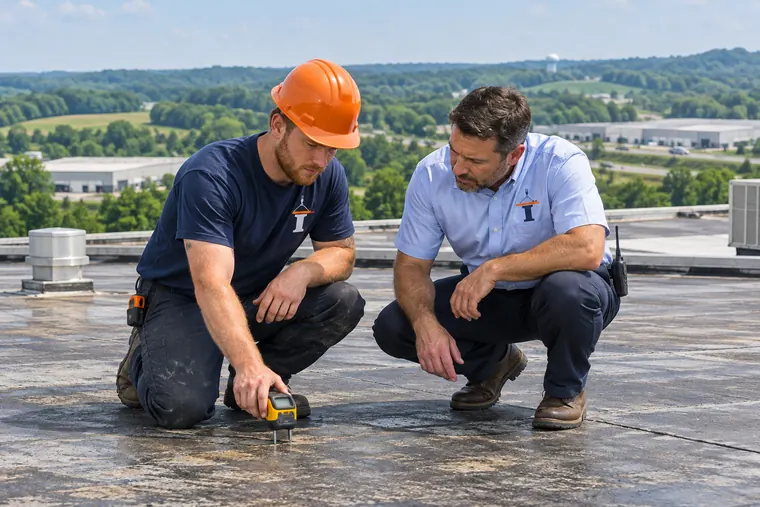
Core cuts show the deck, the old layers, and whether the insulation is dry. Curb heights and drain locations are measured for the new tapered layout.
Set Insulation and Cover Board
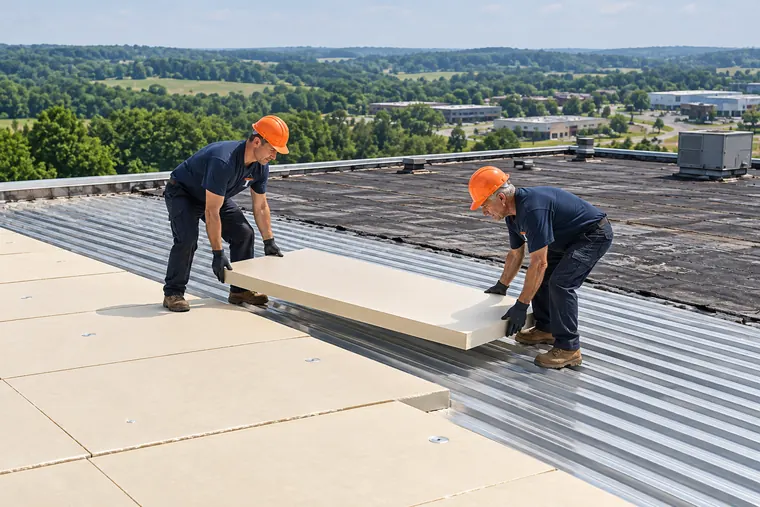
Polyiso boards, tapered toward drains where water sat, go down first. A cover board on top shields the insulation from boots, tool drops, and hail.
Weld and Probe the Seams
Robotic welders fuse long field laps and hand welders handle curbs. Test cuts at the start of each day confirm settings, and every seam is probed once it cools.
Flash Every Detail
Curbs get wrapped with welded corners, pipes get boots, drains get new clamping rings, and parapets get membrane up the face capped with coping.
Best TPO Roofing Fit for Independence Buildings
TPO is one of several single-ply and low-slope paths. These pages explain the others.
- See the service
EPDM Roofing
Roofs crowded with pipes and vents, or owners who want rubber that stays limber in the cold, often compare TPO against EPDM.
- See the service
Industrial Roofing
Plant roofs with oil mist or process exhaust need chemical resistance checked before any white membrane goes down.
- See the service
Flat Roofing
Old gravel roofs that pond badly get a tear-off and tapered insulation before the new TPO sheet goes on.
TPO Roofing Questions From Building Owners
Plain answers on how TPO is attached, welded, flashed, and kept bright on Kentucky buildings.
The Membrane
What is a TPO roof, and which buildings use it?
TPO is a thermoplastic single-ply sheet, usually white, joined by hot-air welds into one membrane. Retail centers, offices, medical buildings, and flex warehouses with low-slope decks use it most. It sits over insulation and a cover board, so the boards underneath matter as much as the sheet.
Does a white TPO roof help keep a building cooler in Kentucky summers?
It lowers the roof surface temperature by reflecting sun a dark roof would absorb. How much that changes the space below depends on insulation thickness, ceiling height, and cooling. White TPO roof cooling in Northern Kentucky fades as dirt and soot build up, so rinsing helps.
Installation
Should TPO be mechanically attached, fully adhered, or ballasted?
Deck type, wind exposure, and building height decide it. Screws and plates in the laps suit steel decks on warehouses, adhesive over a cover board suits roofs that need a smooth surface, induction plates hide fasteners, and ballast needs a deck rated for the stone weight.
How are TPO roof seams welded and checked?
Robotic hot-air welders fuse the long field seams, and hand welders work corners, curbs, and short runs. Test cuts each morning confirm the settings. Once seams cool, a blunt probe runs along every lap, T-joints get round patches, and any spot the probe opens gets a patch.
Details
How is TPO flashed at curbs, drains, and parapet walls?
Each transition gets its own piece. Unit curbs are wrapped with welded corners, pipes get pre-molded boots, drains get the sheet clamped under a new ring, and walls get membrane up the face under metal coping. Flashing height follows the maker's details, which matters when new insulation raises the roof.
Can new TPO go over my existing roof?
Sometimes. A recover goes over one existing roof if that roof is dry and firm, with wet areas cut out and a cover board or separator sheet between old and new. A roof that already carries two layers comes off to the deck first under the Kentucky Building Code.
Book an Independence TPO Roofing Contractor
Tell us the roof size, the deck if you know it, and what sits on top. We will inspect it and lay out the TPO system that fits.